With 34 locations across Minnesota and Iowa, Ziegler CAT is one of the largest Caterpillar dealers in the United States. The team regularly performs preventive maintenance on heavy equipment — including skid loaders, articulated haul trucks, excavators, large wheel loaders, landfill compactors and dozers — that runs in all kinds of weather, ranging from blazing-hot summers to freezing-cold winters.
Thanks to the range of weather the Midwest throws at them, they’ve worked hard to find PM solutions that keep their customers’ projects running and their technicians comfortable through every season. For Ziegler CAT, that includes a Sage Oil Vac Non-CDL Enclosed Lube Body. Here’s why.
The biggest preventive maintenance challenges in cold climates
There are two big issues for crews tackling on-site cold-weather preventive maintenance work: cold oil and frozen pumps.
Oil behaves differently in frigid conditions. As temperatures drop, oil viscosity increases. This slows down the flow, so routine preventive maintenance takes longer — and technicians spend more time out in the cold.
For some crews, pump-based PM equipment becomes a major problem in the winter. If it freezes, it has to thaw out before an oil change can even start. There’s also the risk of damaged seals when temperatures dip. Plus, the next trip to a jobsite can expose pumps to winter temperatures and freeze them all over again.
Owen Orr, field service technician for Ziegler CAT, has dealt with that headache more than once.
“With our old setup, I had a lot of problems with pumps freezing up. I’d have to stop and wait for them to thaw out and then go back to work,” he said. “And it’s a repetitive cycle that adds a lot of time to the process.”
So, why not just bring the machines to a heated shop for preventive maintenance during the winter? Because it takes more time. Every minute equipment is down, customers running heavy equipment are missing out on potential revenue.
“Downtime for my customers really means they’re not making money. If they’re not running their machines, they can’t do their jobs,” said Orr.
It’s much more efficient to finish maintenance on the job — no matter what the weather is doing.
A truck purpose-built to save time and streamline work
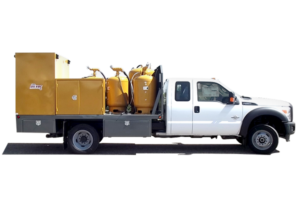
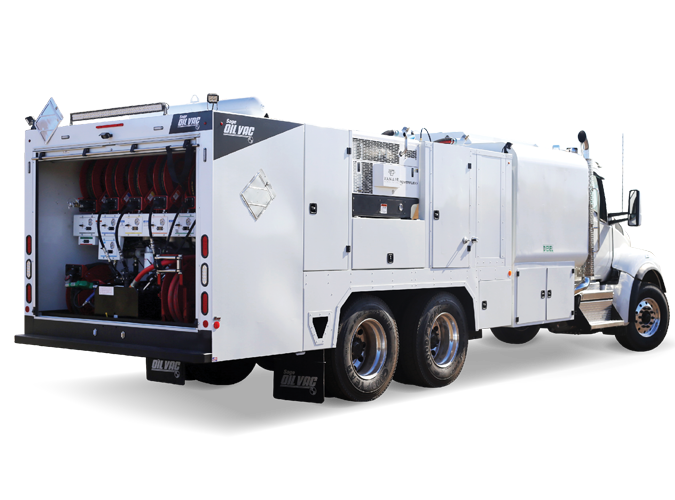
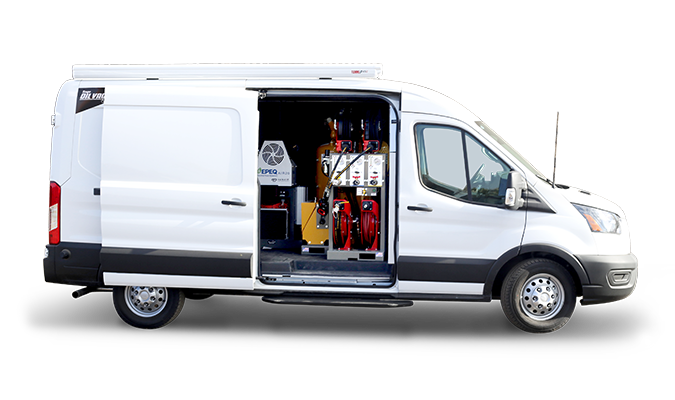
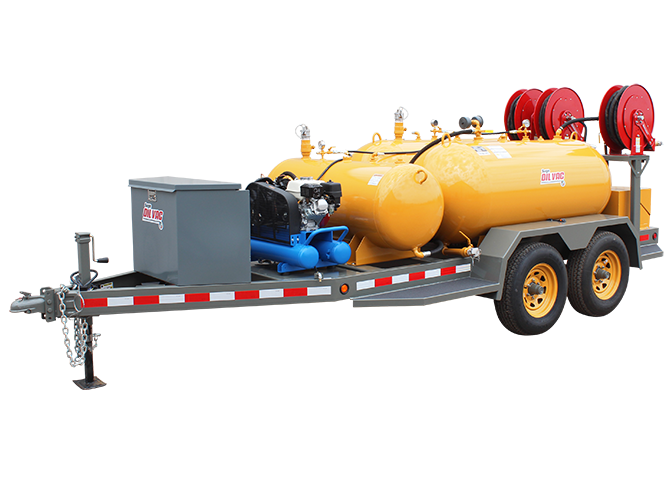
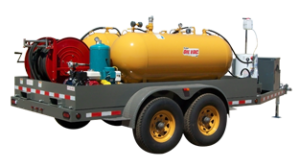
That’s where the Sage Oil Vac Non-CDL Enclosed Lube Truck comes in clutch for Ziegler CAT. It’s designed to help their team support customer equipment uptime, even in winter temperatures.
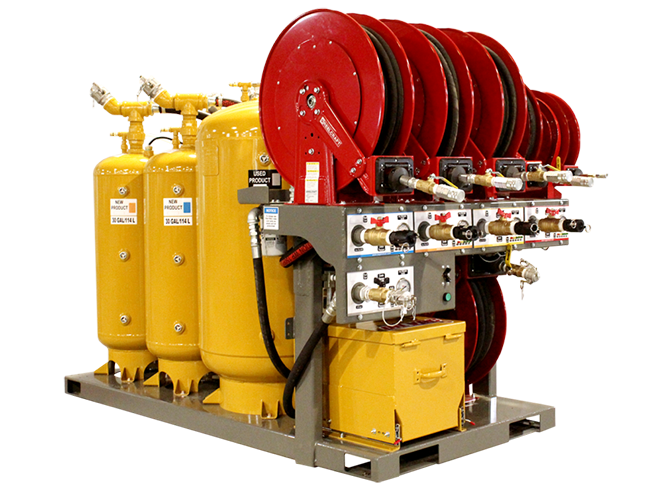
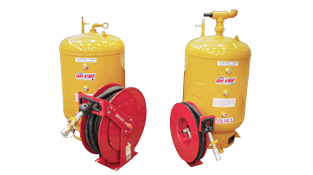
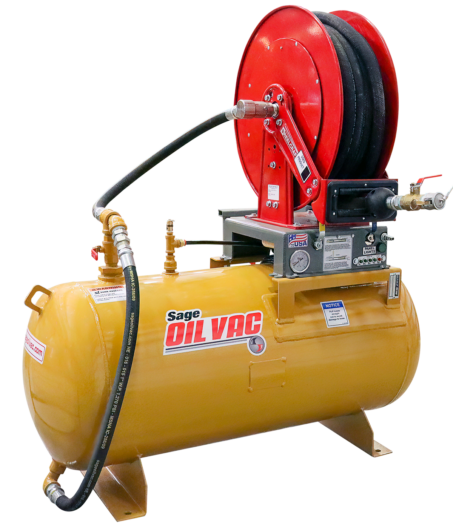
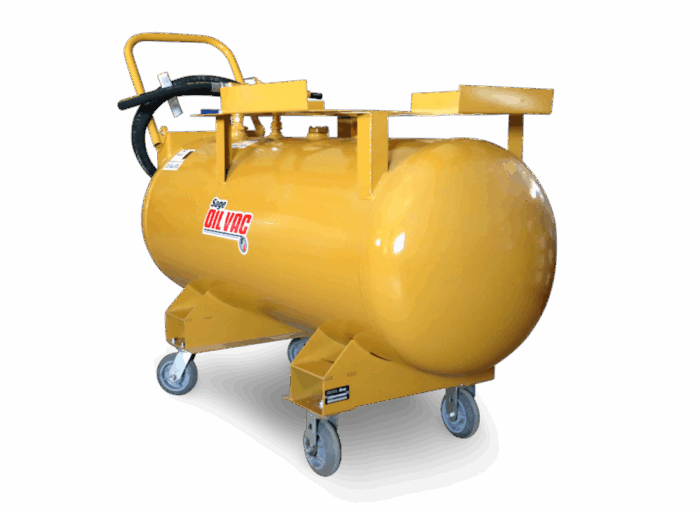
The biggest difference is the truck’s pump-free setup. Sage Oil Vac systems are engineered with exclusive pump-free technology that uses compressed air and vacuum pressure to remove used oil and replace it with new fluid. There are no pumps to freeze up, rebuild or replace. That translates into immediate time saved on system maintenance.
But that’s not the only time Owen and his team are saving. Pump-free oil changes are faster than those with pump-based equipment. Sage Oil Vac systems can vacuum fill fresh oil tanks at up to 20 gallons per minute, dispense products at up to 5 gallons per minute and vacuum hot motor oil at up to 8 gallons per minute. And that efficiency can translate to completing more jobs in one day.
“The Sage Oil vac truck, for me, has sped up my process by an hour at least every day,” Orr shared. “It keeps me moving so that I’m not out here in the weather all day fighting problems from the cold.”
The truck’s enclosed, insulated body is another important feature that helps save time in the field. If the oil can stay warmer, it won’t thicken up and slow down the process.
“The enclosed body of this truck keeps all my tanks and all my oil out of the weather. I don’t have to deal with snow or ice on my tanks or anything like that,” Orr said.
When the weather warms up, that enclosed body creates an added layer of protection against jobsite dust and dirt. And that’s the perfect complement to the sealed tanks and enclosed system integrated into every Sage Oil Vac solution. They’re designed to keep contaminants out of fluids and prevent spills.
Why Sage Oil Vac stood out from other lube truck manufacturers
As manager of procurement and logistics for Ziegler CAT, Joe Packard looks for equipment that matches the company’s focus on innovation. Sage Oil Vac equipment fits the bill.
Packard first heard about the pump-free systems from other CAT dealers, which led to investing in a Sage Oil Vac jobsite trailer that’s now been in the field for four years. When the Non-CDL Enclosed Lube Body launched, he felt like it was the right solution for the team’s work.
“We wanted PM equipment that could keep up with our demands in the field and help us maximize uptime,” Packard said. “So, Sage Oil Vac stood out just because they offer solutions that are practical and forward-thinking.”
Practicality is built into every aspect of their lube truck, from the pump-free fluid exchange to the dedicated reel cabinet. And each factor helps the Ziegler CAT team tackle heavy-equipment oil changes in winter and summer weather — and every condition in between. Just ask the people using the truck.
“I do really like the storage and the hose reels on the back of the truck. It’s a big help for me. My old truck was set up with everything on the left side of the truck,” Orr said. “Sometimes, you can’t get next to a machine with the left side of the truck, but usually, I can always back up to a machine.”
One other factor that made working with Sage Oil Vac a done deal for Packard was the true partnership with the Sage Oil Vac team.
“I mean, the truck speaks for itself. But the vendor relationship there, it’s partnership. They’re collaborative. They want to make sure that everything works properly and that we understand how to utilize every aspect of it,” Packard said. “Just all in all, I think it’s just the values of the Sage Oil Vac team and how that correlates to our values.”
And what about the future? Will there be more Sage Oil Vac trucks for Ziegler CAT?
“I know the teams that have them in place right now really like them, and we’ve had other locations asking about them for future opportunities,” Packard said. “So that’s definitely something that we’re going to look at.”
It’s always a good time to make sure your equipment is in top operating condition. Picture this: You’re just starting the day with a full schedule ahead and you get hit with a maintenance set back. Now, the whole day is thrown off — you might even have to reschedule a few things on the list. Whether it’s just bad luck or something you could have prevented, regular and thorough care of your equipment is the best bet for a smooth day on the job, no matter the season. Sage Oil Vac is always here to help, so we’ve compiled a list of preventative maintenance tips, tricks and advice:
In planning ahead for that busy time, it’s important to account for the machinery you’ll be maintaining and what it will need, according to Sage Oil Vac CEO Aaron Sage. “Make sure everything is serviced, including specific components like wheel bearings,” Sage said. “Ideally, you want to start the busy maintenance season with all of your machinery ready to run efficiently and without interruption.”
Don’t forget these components.
In addition to checking major mechanical and structural components, Sage said it’s important to inspect parts that many operators don’t typically think about when conducting early-season maintenance, including their Sage Oil Vac systems. “It starts with really basic maintenance, like ensuring your trailers are inspected and ready for the road,” Sage said. “The long game here is that you need to be efficient on the maintenance side.”
Equipment maintenance tips 101
Air Compressors: Your Sage Oil Vac is built to be dependable and long-lasting — this is in-part due to its very few moving parts. So, the air compressor is the most important part to keep maintained on your unit. Use the recommended maintenance schedules that come with the system for the engine and the compressor pump. An oil change on the engine and pump should be performed at least one time per year regardless of use on your system. Intake air filters should also be replaced at least one time per year.
Compressor air tanks should be drained daily during use. The Sage Oil Vac design (on some models) can result in a collection of used oil in the holding tanks that can accumulate from oil mist vacuumed into the holding tanks. This is harmless to the design of the system however, the used oil should be drained and disposed of properly to properly maintain the compressor.
Pro Tip: Operating your Sage Oil Vac continuously with the used oil tank completely full could result in a large amount of used oil accumulating within the compressor heads and air tanks. It’s important to unload the used oil tank if its capacity reaches 95 percent or before.
Ball Valves: Ball valve actuation can become loose over time and may need to be replaced. Check that that ball valve actuation on each ball valve is not so loose that they can open or close during routine travel to the jobsite.
Cam Locks: Cam lock fittings should have caps and plugs installed to reduce drips and spills. Female cam connections need to have both actuating arms intact and working to secure a good connection.
Filters: Sage units come with 10- to 25-micron fresh fluid filters for all new fluids. We recommend that these are changed two times per year or every 1,000 gallons of oil filtered.
Hose reels: Check the spring latch assembly of the hose reel to ensure that the reel is performing properly. Grease swivels should be greased at least once a year and more often for heavy use depending on the model. Double check that all ball stops are installed and tight to keep the hose reel tension in good shape.
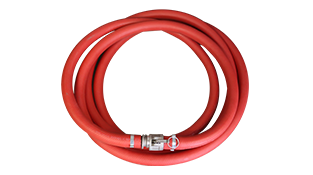
Hoses: Sage Oil Vac uses 1,000+ psi hoses for their systems. Check the outer hose covers and look for any gouges or wear — this is especially important on spring retractable hose reels. Keep a lookout for spots where oil is seeping through the outer cover, as this could indicate that the inner lining of the hose has a rip or tear.
Hydraulic Connections: Clean off any grime or dirt from the hydraulic fittings for a secure connection to meters and equipment — any leaks should be addressed promptly.
Lug Nuts: The lug nuts on trailer wheels need to be tightened to the proper torque — this is an important responsibility that trailer owners and users need to be familiar with. Inadequate and/or inappropriate wheel nut torque (tightness) is a major reason that lug nuts loosen in service. Loose lug nuts can rapidly lead to a wheel separation and serious safety consequences.
Lug nuts are prone to loosen right after a wheel is mounted to a hub. When driving on a new or remounted wheel, check the lug nut tightness frequently during the first few hundred miles of the trailer’s use. A good rule of thumb is to check after the first 10, 25 and 50 miles of driving, before each tow, and at least twice per year thereafter.
It’s also important that you tighten lug nuts to the proper torque for the axle size on your trailer to prevent wheels from coming loose. The only way to be certain you have tightened the lug nuts properly is with a torque wrench. Four-way wrenches, ratchets and similar tools can be useful for short-term emergency repairs but they’re not appropriate tools for adequately tightening lug nuts.
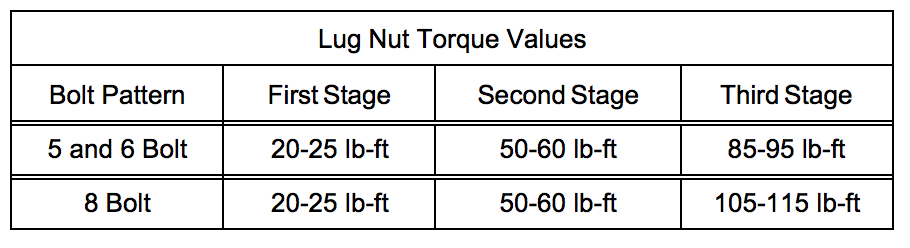
While tightness is important, be warned that overtightening can result in breaking the studs or permanently deforming the mounting stud holes in the wheels. Tighten per sequence in Figure 1 below. Using this sequence, tighten all lug nuts in three stages and to the torque values listed in Figure 2 for each stage.
Pro Tip: Keep a record of the date and approximate mileage of your last torque check somewhere on or inside your equipment. Make note of any lug nut that is loose and investigate the reason(s). If the lug nut tightness is not maintained after more than one re-tightening application, this indicates there is something wrong with the lug nuts, studs, wheels and/or hubs and must be corrected.
Figure 1. Lug Tightening Sequence

Figure 2. Lug Torque Requirements
Meters: Electronic meters will occasionally need new batteries. High flow non-drip ends should be cleaned regularly to for a proper close to keep drips and spills to a minimum.
Running Lights: Make sure all brake lights, turn signals, license plate lights and market lights work correctly.
Tires: Check the condition of the tire tread, and make sure there is adequate air pressure. Also inspect for gouges or other defects.
Sage Oil Vac Tanks: The Sage Oil Vac design ensures that very little outside dirt and elements are introduced into the tanks, protecting their cleanliness, but an annual flushing of the used oil tank is recommended to flush out sludge and other contaminants that have been vacuumed out of engines and drain pans with debris. To do this, vacuum 5-10 gallons of diesel, pressurize the tank (no more than 5 psi) and dispense the fluid to flush the tank and hose circuit. This same method can be used to switch fluids in new oil tanks if necessary — i.e., switching a 15W-40 motor oil tank to a hydraulic fluid tank.
Wheel Bearings: It’s recommended to grease wheel bearings every 12 months or 12,000 miles, whichever comes first. You can use red grease for trailer wheel bearings or wheel bearing grease, which is specially designed for use on trailer running gear. Wheel bearing grease has a slightly higher temperature rating, 520 degrees, compared to 510 degrees for the red grease.
When adding grease, make sure that the new is compatible with the old or remove the old grease completely. Incompatible greases can break each other down. Also, inspect the bearings and races before repacking them and replace the grease seals since they will likely be damaged in the process.
Consider equipment accessories for increased efficiency.
After you’ve inspected your equipment and ensured it’s ready for the jobsite, it’s a good time to consider any changes or additions you can make to become more efficient. That may mean adding new machinery or making smaller changes. For example, Sage said adding new drain plugs and hose assemblies can make oil changes cleaner and more efficient, especially when used alongside a Sage Oil Vac system.
“Once your machinery is ready to go, it’s a good time to start looking at a system to enable you to connect directly to machines for changing oil, making it cleaner and more efficient,” Sage said. “Cleaner drain plugs like those from Femco® work well with Sage Oil Vac systems and can make you better at your job of changing oil on the jobsite.”
Plan your maintenance operations.
Early in the busy season is a good time to look at ways you can streamline not just your equipment, but how you use it. Extended oil changes have been a growing trend in the automotive industry for some time now, and it’s starting to work its way into the construction sector. While it may work for some equipment, waiting longer between oil changes isn’t feasible for all machinery, largely because of working conditions. Prioritizing oil change jobs based on frequency and need is one way to make your operations more efficient.
“The deciding factor on that is the work environment. Is it a dirty environment? How hard is the machinery working? If it’s dirty and the machinery’s working hard, you can’t really delay oil changes,” Sage said. “If it’s an over-the-road truck that’s getting a lot of hours on it, but in cleaner working conditions at the same RPM for long periods, extended oil changes will work. If it’s an excavator ramping RPM up and down, working out in dirt storms and getting worked really hard, you need to monitor oil a lot more closely and keep oil changes more frequent.”
Regular maintenance is essential to keep equipment, accessories and your work environment safe and reliable. Do not hesitate to contact your Sage Oil Vac Dealer for any maintenance and equipment questions.